28.09.2026 OFINU’s International Forum Held in Samarkand (Uzbekistan)
Section outline
-
-
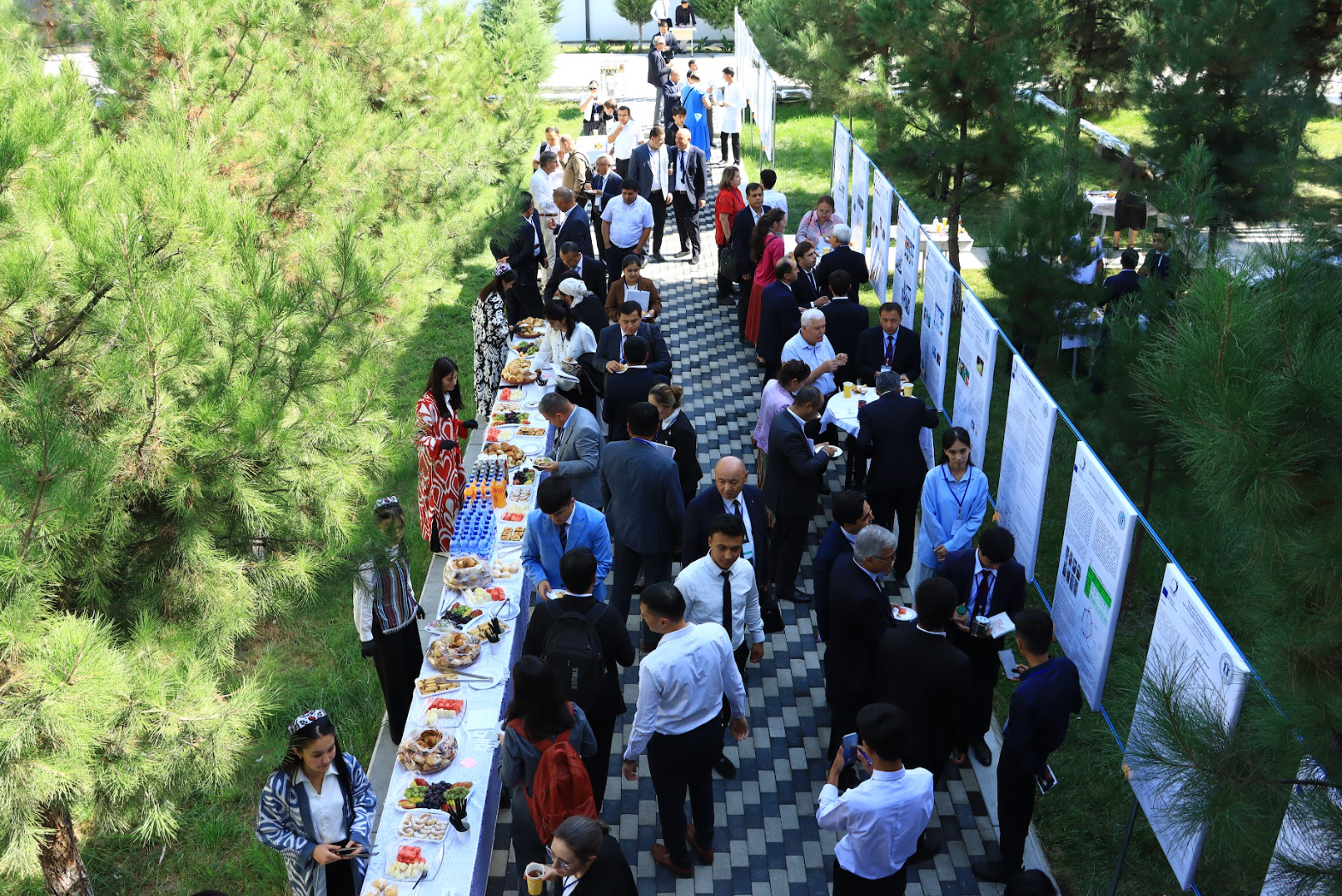
On 25–26 September, around 100 participants from 7 countries - Uzbekistan, Tajikistan, Latvia, Slovakia, Italy, Finland, and Japan – came together at the OFINU Forum “Innovative Education Forms for Economic Growth and Human Capital Development.”
 Plenary and panel sessions covered the project's results and explored themes of future skills, lifelong learning, knowledge, and innovation for sustainable development.
 Five interactive workshops – master classes demonstrated the Open University approach through hands-on food innovation activities. They were: 1. Protein-Based Products for New Dairy and Meat Food. 2. Sensory Evaluation Methods in New Food Evaluation. 3. New Opportunities in Cereal Product Production. 4. Unusual Use of Plants as a Promising Ingredient for Innovative Foods. 5. Essential Oils, Encapsulation, and Edible Coatings: A Multifunctional Strategy Against Foodborne Pathogens.
 Fifteen students from Tajikistan and Uzbekistan partner universities presented fresh ideas and practical solutions in food technology and innovation, assessed by an international jury.
 The Central Asia–Europe Food Innovation Showcase presented innovative food products from Latvia, Slovakia, Tajikistan and Uzbekistan, and offered opportunities for tasting, exchange and inspiration.
 Company visits – visits to food companies, associated partners of the OFINU project, held on the second day of the Forum, provided an opportunity to continue the dialogue on the food industry’s knowledge and technology needs.
 Two dynamic days connected universities, industry, students, and international experts, allowing them to share results and experiences and turning knowledge into collaboration and new opportunities!
The main conclusion of the event: the flexible Open University model and new study modules have proven their value, relevance, and potential. An Open University model is applicable in any field of study.
-